For many investors in the San Francisco Bay Area, the path to financial independence often feels like a choice between the high-growth potential of the tech-heavy stock market and the tangible, high-value world of local real estate. However, the most resilient portfolios in 2026 are rarely "all-in" on a single asset. Instead, they rely on a balanced strategy that plays to the strengths of different markets.
Below is a breakdown of how to weigh these options as you build your investment foundation.
1. The Bay Area Real Estate Advantage
Real estate remains
a cornerstone of wealth in the East Bay for several key reasons that "paper assets" simply cannot match.
- The Power of Leverage: Unlike stocks, where you typically pay the full price of the asset, real estate allows you to control a high-value property with a fraction of the cost down.
- Tax Efficiency: Through depreciation and mortgage interest deductions, real estate offers a "tax shield" that helps you keep more of what you earn.
- Tangible Security: While a stock price can fluctuate wildly overnight, a
Residential Lease
property in a high-demand area like
Hayward or
San Leandro provides a steady stream of rental income and
long-term appreciation.
2. Stocks and the Tech Sector
Being in the heart of Silicon Valley, many of us are naturally drawn to the stock market.
- Liquidity: Stocks offer the ability to move in and out of positions quickly, which is something real estate cannot do.
- Diversification: While real estate
ties you to a specific zip code, a well-balanced stock portfolio allows you to own a piece of the global economy.
- Strategic Growth: Focusing on broad indices or diversified tech holdings can provide the growth needed to fund your next property down payment.
3. The Role of Gold (and Alternatives)
Gold has traditionally served as the "ultimate insurance policy." In a diversified 2026 portfolio, it acts as a stabilizer.
- Inflation Hedge: When the cost of living rises, gold historically maintains its purchasing power.
- Risk Mitigation: Gold often moves in the opposite direction of the stock market, providing a safety net during periods of high volatility.
The 50-30-10-10 Strategy
To balance growth, stability, and high-value assets, a structured allocation can provide a clear roadmap:
- 50% Stocks: For growth and liquidity.
- 30% Real Estate: For leverage, tax advantages, and rental income.
- 10% Gold: For wealth preservation.
- 10% Alternative Assets: For high-upside potential in a digital economy.
Why Professional Guidance Matters
Managing a multi-asset portfolio—especially one involving physical property—requires more than just a search bar.
- Regulatory Compliance: Managing property in California means navigating a complex web of statewide and local mandates. From the new appliance requirements under
AB 628 to the "Junk Fee" bans of
AB 1248, one legal oversight can erase your investment gains.
+1 - Market Insight:
A professional
Property Manager or
broker doesn't just manage buildings;
they manage your ROI. By ensuring your property is compliant with the
"A to Z" of
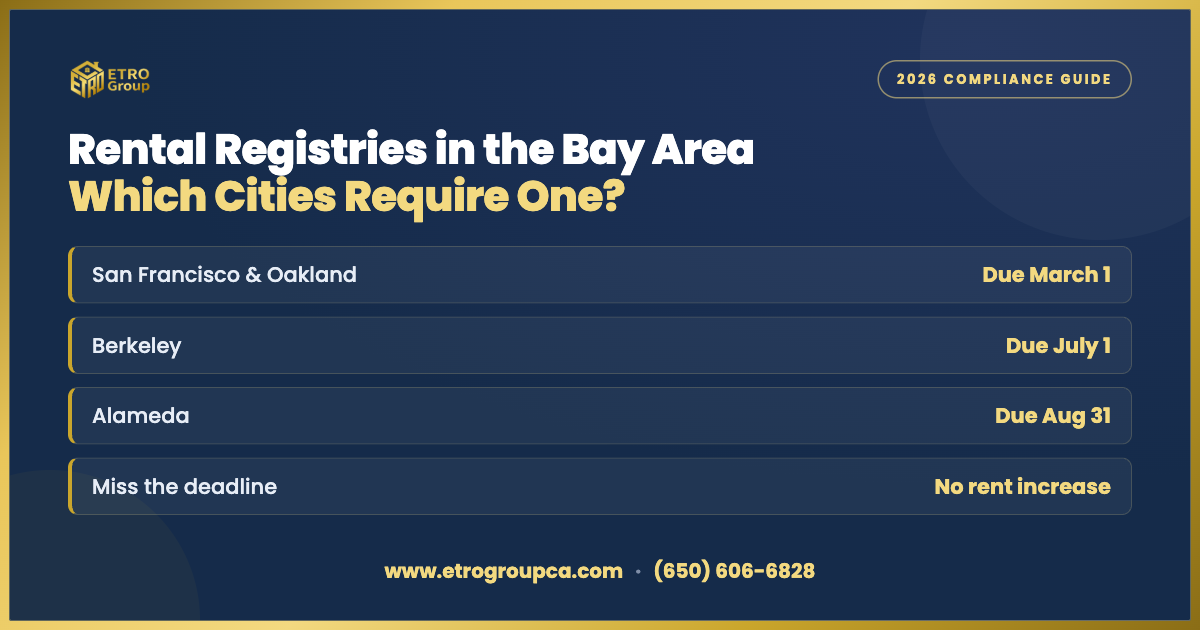
local disclosures , they protect your asset from triple-damage penalties and the
"Registry Trap" found in cities like San Leandro.
+2 - Efficiency: Professional management ensures your real estate investment remains a "passive" income stream, not a second full-time job, by handling the high-resolution documentation and digitized audit trails required for protection today.
Final Takeaway for 2026 Investors
In the end, successful investing in the Bay Area isn’t about finding a single "winner"—it’s about building an ecosystem where your assets complement one another. While stocks provide the growth to expand your reach, and gold provides the safety net for your peace of mind, real estate provides the foundational stability that turns a portfolio into a legacy. By combining a diversified plan with the right professional expertise, you can navigate market volatility with confidence, ensuring your wealth continues to grow as the Bay Area evolves.